
Project planning · Rukva Construction
What to gather before requesting a home estimate
Prepare a useful project description, take clear photos, and bring the questions that help define the work before you compare proposals.
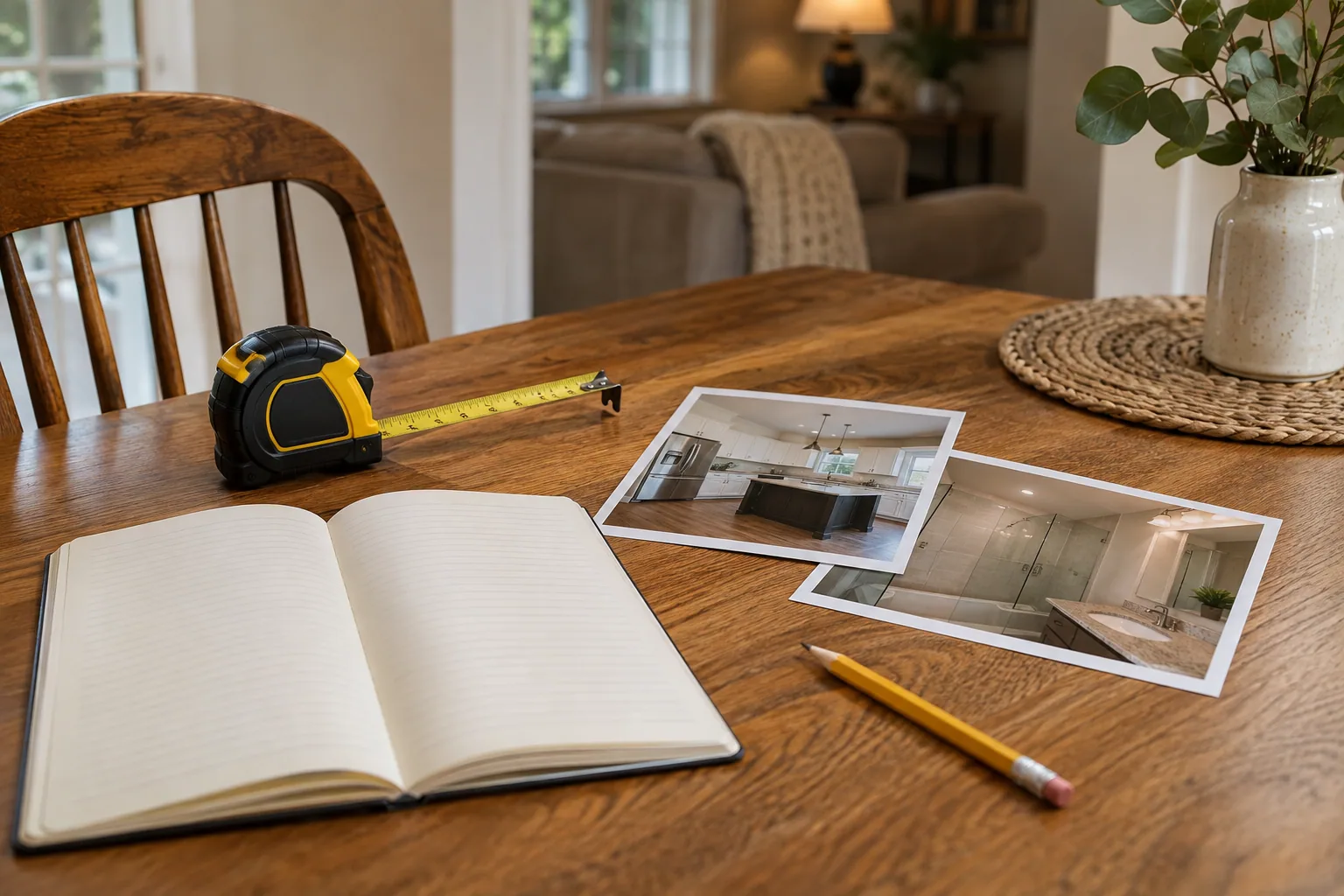
You do not need a finished renovation plan to ask for an estimate. You need a way to explain the home, the concern, and the result you want. A few organized notes can do that better than a long message full of guesses. Here is what to gather before the first conversation, and what can wait for an assessment.
Start with the location and the result you want
Put the city or ZIP code at the top of your notes. Include the county if you know it. Rukva Construction serves Houston, Peach, and Bibb counties in Middle Georgia; the project location helps establish where the work would take place. Keep contact details together so they are easy to find when you call or email.
Next, describe the result in a sentence. For example: replace the worn flooring in two bedrooms, discuss a roof concern above the hallway, or plan new fixtures during a bathroom update. These are example descriptions, not completed Rukva projects. If your list includes several jobs, start with organizing your home project so the most important task leads the conversation.
Describe what you notice without diagnosing it
Write down where the concern appears, when you first noticed it, and whether it happens regularly or under particular conditions. A description such as a stain that appeared after rain is more useful than an unconfirmed conclusion about what must be replaced. Separate your observations from anything you have been told or suspect.
Include previous repairs if you know about them, but mark uncertain dates as approximate. Keep receipts, product names, or earlier work descriptions available if they relate to the same area. You do not need to investigate hidden spaces or disturb equipment. Let an appropriate assessment establish the cause and the work needed.
Take photos that explain the space
Begin with a wide view, then take closer photographs of the detail you want to discuss. Add a view of adjoining surfaces or fixtures when they help explain the layout. Label the images by room or location so a close-up does not lose its context among several similar photographs.
Use places you can reach safely. Preparing an inquiry does not require climbing onto a roof, opening electrical equipment, or removing building materials. If a detail is difficult to photograph, describe it instead. For a flooring inquiry, the room-by-room flooring guide identifies transitions and doorways worth including in your notes.
Separate firm choices from open questions
Make two short lists. The first contains decisions you have made: the rooms involved, an item you want to keep, or a product you have selected. The second contains questions: whether an existing surface can remain, which finish fits your routine, or how several tasks should be coordinated.
Add product links and dimensions when available, but do not present a reference image as a confirmed specification. Explain what you like about it. A color, layout, and material are separate decisions, and you may be settled on only one of them. Clear labels keep the conversation from moving ahead on assumptions.
Share practical limits early
Mention whether you will live in the home during work, which spaces need to remain available, and how access would be arranged. Include pets, work-from-home hours, delivery restrictions, and other projects that could overlap. These details belong in the scope discussion because they affect how the work can fit your household.
If you have a spending range or a preferred time window, share it as planning information. Ask what can be assessed now and what needs further checking. A preferred date is not a confirmed start date, and an early conversation may leave parts of the scope open. Record those open points rather than filling them with guesses.
Ask how the estimate will define the work
Before ending the conversation, ask what information is still needed and how the proposed work will be described. Useful questions cover materials, preparation, removal, cleanup, exclusions, and how changes will be discussed. Ask which decisions you need to make before the proposal can be completed.
Keep each proposal with the notes and photos it refers to. When estimates arrive, use the guide to comparing home improvement estimates to review scope before price. To begin a Rukva inquiry, use the [estimate request form](/contact), call, or email with your project location and a short description.